
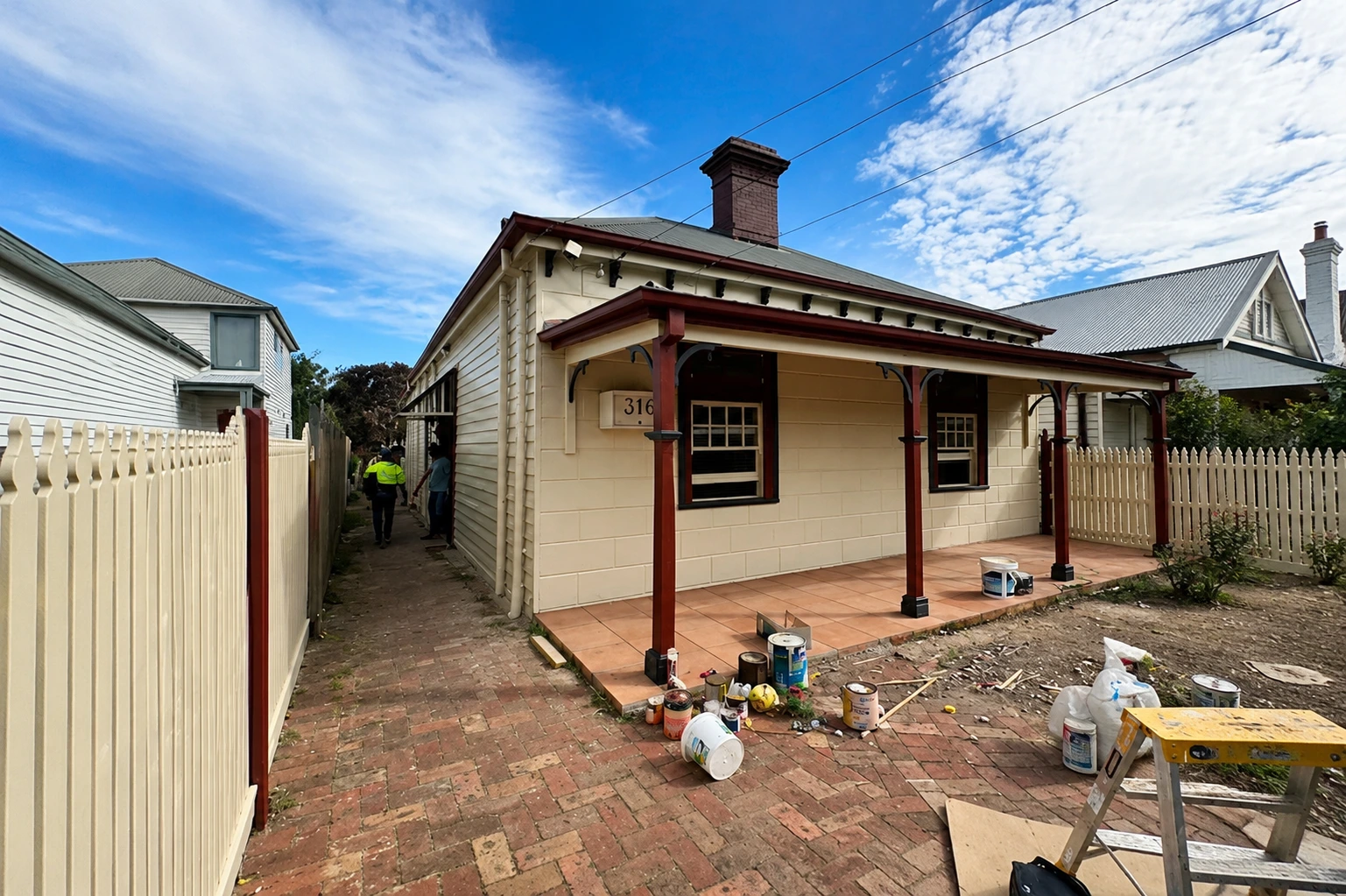
Painting your own home is like giving it a fresh personality. I still remember my first DIY project: rolling a bold teal on one wall and watching the room come alive. It felt like magic! But painting isn’t all fun and games – it takes some planning.
In Dandenong’s climate and style, picking the right house paint colors, finishes, and types will make all the difference. Thankfully, once you know the basics and have a few insider tips, house painting can be a breeze.
Let’s explore how to make your house painting project smooth and satisfying, from color choices to the final coat. Grab a cup of tea and let’s dive into these house painting tips!
House Painting Color Ideas and Selection
Choosing a color scheme is one of the most exciting parts of a house painting project. Think of color as setting the mood for your room: crisp whites or pale greys can make a space feel calm and roomy, while mustard yellows, teals or dusty greens add a cozy edge.
Right now many Aussies are moving away from cool grey walls and stark whites, favoring warmer earthy neutrals (like warm beiges and soft terracotta) and muted blues. These tones feel fresh and reflect Dandenong’s laid-back vibe.
But beware of following trends blindly: what looks great on a showroom wall might feel overwhelming in your own lounge. Always test sample pots of your chosen shades. Paint a patch on each wall and watch it at different times of day.
Ask yourself, does the color “feel right” with your furniture and natural light? Sometimes a single accent wall in a bold shade is all you need to make a statement without overwhelming the room.
House Painting Finishes (Matte, Satin, Gloss)
Beyond color, the paint finish (sheen) dramatically affects the final look and durability. Think of finishes like the sheen on clothing: matte is like cotton, smooth and soft-looking (it hides flaws), while gloss is like patent leather, shiny and reflective (but shows every imperfection).
A matte (flat) finish absorbs light, which hides tiny bumps or patching—perfect for bedrooms or ceilings where light scuffs are rare. The downside? Matte paint can stain and is harder to clean.
Satin or eggshell finishes give a gentle glow and are more durable and washable – ideal for living rooms, hallways or kids’ rooms where you might wipe fingerprints off occasionally.
Semi-gloss and gloss are very shiny and extra hard-wearing; they’re great for doors, window trims or kitchens where splashes happen.
Just remember: the higher the sheen, the more your paint will highlight dust, drips or brush strokes, so touch-up carefully.
|
Finish (Sheen) |
Look & Feel | Durability / Cleanability | Common Uses |
| Matte/Flat | No shine, velvety texture | Low durability; stains easily |
Ceilings, adult bedrooms, low-traffic areas |
|
Eggshell/Satin |
Soft sheen, warm glow | Medium durability; wipeable with care | Living rooms, hallways, kids’ rooms |
| Semi-Gloss | Noticeable shine | High durability; very easy to clean |
Trim, doors, windows, kitchen cabinets |
|
High-Gloss |
Very shiny, reflective | Very high durability; wet cloth safe |
Cabinets, trim, bathrooms, kitchens |
Types of Paint for House Painting Projects
Not all paint is created equal. For any house painting job, the paint “type” (base and formulation) matters a lot. Broadly, paints fall into water-based (acrylic/latex) and oil-based (alkyd) categories. Water-based paints dominate modern DIY.
They dry fast, have low odor, and soap-and-water cleanup. Most house painting services in Victoria (and hardware stores like Bunnings) will steer you to acrylic latex for walls because it flexes with temperature changes – vital for Aussie summers and winters. Acrylic also holds color well on interior walls or exterior weatherboards when used with the right primer.
Oil-based paints used to be the go-to for durability. They level out to a perfectly smooth finish, so professionals often use oil paint for trims, skirting boards, doors and old timber. Today you’ll find “oil” in some specialty enamels.
The trade-off is longer drying time, stronger fumes, and mineral spirits cleanup. A compromise is water-based enamel (or hybrid): it gives a hard, smooth finish (similar to oil) but is acrylic at its core. These are popular for kitchens or cabinetry.
|
Paint Type |
Best For | Pros |
Cons |
|
Acrylic/Latex (Water) |
Walls, ceilings, exterior siding | Fast-dry, low-odor, easy clean-up, flexible |
Needs primer on bare wood/metal |
|
Oil/Alkyd (Traditional) |
Trim, doors, furniture | Very smooth finish, extremely durable |
Strong fumes, long drying time, solvent cleanup |
|
Water-based Enamel |
Cabinets, trim, wet areas | Hard, durable finish like oil paint |
Slight odor, usually pricier |
|
Elastomeric (Acrylic) |
Exterior brick, concrete, stucco | Waterproof, very thick coat that seals cracks |
Must apply thickly, more expensive |
|
Chalk & Milk Paint |
Furniture, décor projects | Eco-friendly, unique matte look |
Porous finish, needs sealing, not highly durable |
Interior vs Exterior House Painting Considerations
Painting inside your home has different priorities than painting outside. For interior house painting, one big factor is air quality. Nobody wants to live in a paint fume cloud. opt for low-VOC (Volatile Organic Compound) or no-VOC paints wherever possible – these modern formulas cut harmful chemicals by up to 99%. Always ventilate rooms well: open windows and use fans while painting and as it dries. Plan so you can work in one room and let it air out before moving to the next.
Exterior painting is another animal entirely. Dandenong’s summers can be warm and winters mild, but rain is possible in any season. Use 100% acrylic exterior paint or high-quality exterior emulsion. Light colors will reflect sunlight (keeping your home cooler and the color from fading), while dark colors absorb heat and can fade faster under UV.
Timing is everything: paint on a dry day with low humidity and temperatures around 15–25°C. Painting on a hot, windy day can cause the paint to dry too quickly and crack, while a chilly or damp day can prevent proper curing.
House Painting Steps and Techniques
Get organized first. Cover floors and furniture with drop-cloths, and use painter’s tape on trims, fixtures and edges you want to keep crisp. Don’t skip prep: a little work here saves big headaches later. Scrub away dirt or mildew, then sand any peeling paint until smooth.
Fill holes or cracks with filler and sand flush. On bare plasterboard or new timber, apply a suitable primer to seal the surface – this helps the topcoat adhere and may even reduce the number of finish coats needed.
Here’s a handy checklist of tools and methods:
- Prepare surfaces thoroughly. Sand, patch, and clean as needed. On painted walls, remove loose flakes and sand glossy areas lightly. Primer in key spots (like over stains or new drywall) ensures your topcoat goes on well.
- Gather quality tools. Use good brushes (angled ones for corners) and rollers (choose a nap length for your wall texture). Grab a sturdy ladder (compliant with AS/NZS 1892) and keep it on flat, stable ground. Drop sheets or old sheets protect floors. Mixers or sticks keep paint from separating. Wear old clothes, sturdy shoes, and even a mask for sanding dust.
- Work in the right conditions. Indoors, paint at room temperature on a dry day and ventilate. Outdoors, check the weather – no rain for 24 hours and not too hot or cold. Early morning or late afternoon on a warm day is often perfect. Steer clear of painting in direct midday sun or when it’s very humid.
- Use proper painting techniques. “Cut in” the edges first: with a brush, paint along ceilings, corners and trim. Then use a roller. Roll in a ‘W’ or ‘M’ pattern to lay down an even base, then fill it in without lifting the roller (this keeps a wet edge). Apply two thinner coats rather than one thick coat – it looks more even and resists peeling. Remember to stir your paint regularly for consistent color.
- Special projects (cabinets, fences, etc.). If you’re painting kitchen cabinets or wardrobes, clean and sand them first. Use a premium cabinet paint or water-based enamel and a foam roller for a smooth finish. For a wooden fence, shed or deck, use a paint or stain made for exterior wood. Clean off any mold or dirt, sand splinters, then apply an exterior acrylic paint or stain. Protect surrounding plants with plastic sheeting.
- When to call a pro. Large jobs – say, an entire exterior or a multi-storey building (often done by a commercial painting team) – might be best left to specialists. Professional house painting services come with big ladders, spray rigs and weather know-how. If you have no time (or aversion to heights), getting a quote from a house painting contractor is wise. They’ll ensure safety and speed, and often their work is guaranteed.
Safety, Environment and Cleanup
With great paint comes great responsibility. When you tackle a house painting project, safety and the environment should be top of mind. Ladder accidents are no joke – in fact, over 5,600 Australians were hospitalized in 2017-18 due to falls from ladders.
Always make sure your ladder is stable and locked, wear non-slip shoes, and avoid overreaching (get down and move it instead). Outdoors, wear sun protection (hat, sunscreen) if you’re painting up high on a sunny Dandenong day.
Think about clean-up, too. Never pour paint or thinners down the drain. Leftover paint and solvents are toxic waste. In Victoria, you can take old paint cans to special drop-off locations or community “household chemical clean-up” events. For responsible handling of leftover paint and solvents, follow paint disposal guidelines before disposing of them.
It’s the law to avoid polluting. After you finish, seal paint lids tightly for future touch-ups. Clean brushes and rollers with minimal water – use a bucket to catch the rinsate and dispose of it at a hazardous waste facility if needed. A bit of care here keeps your family and the environment safe.
Lead Paint and Older Homes
If your house was built before the 1970s, it may have lead-based paint under the surface. Lead was commonly added to old paints because it made them durable and bright. The danger is that old lead paint can flake or create dust, which is a serious health risk, especially for children. Lead-based paint is a leading cause of lead poisoning in homes.
Before sanding or scraping an old wall, wet it down and wear a mask. Better yet, consider hiring a professional if you suspect lead; they follow safety protocols to contain and remove it. Note: modern Australian paints only allow trace lead (essentially 0.009% or less), so new paint isn’t a concern – it’s the old layers that matter.
Conclusion:
With the right colors, paint finishes, and proper preparation, house painting can give your home a fresh, modern look. Choose durable paint suited to each space and follow safe painting practices for lasting results.
Whether you DIY or hire professionals, a well-planned paint job can improve your home’s beauty and appeal. Ready to transform your home? Contact us today for reliable house painting services!
Frequently Asked Questions
Q: How do I avoid color mistakes?
A: Always test first. Paint large swatches on different walls and observe them in morning and evening light. Also consider room size: dark colors make rooms cozy but can shrink small spaces, while light colors open things up.
Q: What finish should I use in the kitchen?
A: Kitchens get steam and spills, so semi-gloss or satin (especially water-based enamel) is ideal. They’re easier to wipe clean and stand up to moisture.
Q: Is it better to paint myself or hire experts?
A: Small jobs like one room or an accent wall are DIY-friendly and save cash. But large exteriors or multi-story houses (often tackled by commercial painting crews) are safer and faster with pros. Get a quote and decide if the cost is worth the time and risk.
Q: How many coats do I need?
A: Usually two coats give the best finish. The first coat covers the surface; the second evens out the color and deepens it. Primer can count as a first coat, especially over dark paint or bare walls.
Q: How do I dispose of leftover paint properly?
A: Don’t dump it. Check your council’s website – most have household hazardous waste days or centers. In Victoria, use EPA-approved drop-off points for unused paint and solvents. It keeps toxins out of the environment.